
How To Store a Car Long-Term (Including Classic Cars)
How To Store a Car Long-Term (Including Classic Cars)
A lot of car owners park a vehicle in the driveway, throw a cover over it, and call it stored. The reality is that long-term outdoor parking puts paint, seals, tires, and mechanical components through a slow grind of UV exposure, temperature swings, and pest activity. Indoor car storage changes that equation significantly, and for classic car owners especially, the difference between a covered unit and an open lot can show up in the car's condition years down the road.
Prepare the Car Before It Goes In
How a car goes into storage matters as much as where it sits. Before moving a vehicle into a unit or parking space, do a full oil change, top off the fuel tank, and add a fuel stabilizer to prevent the gas from breaking down. Check the tire pressure and inflate to the recommended level, since tires lose air slowly over months and a flat spot can develop on a tire left underinflated for too long.
Disconnect the battery, or remove it and keep it on a trickle charger at home, since most storage units do not have power outlets. Wash and dry the exterior thoroughly before covering it, since trapping grit under a car cover can scratch the finish over time. For classic cars with chrome trim or painted steel, a coat of wax before storage adds a layer of protection against oxidation.
Enclosed Versus Open Vehicle Storage
Not every storage facility offers the same level of coverage, and the right choice depends on how long the car will sit and what condition it needs to be in when it comes back out.
Open or uncovered outdoor spaces are typically the most affordable option and work reasonably well for newer vehicles stored for a season. A quality, breathable car cover reduces sun and debris exposure in these spaces. Covered or canopied spaces go a step further by blocking direct sun and precipitation while still allowing airflow, which helps keep the undercarriage and interior from sitting in a sealed, heat-trapping environment.
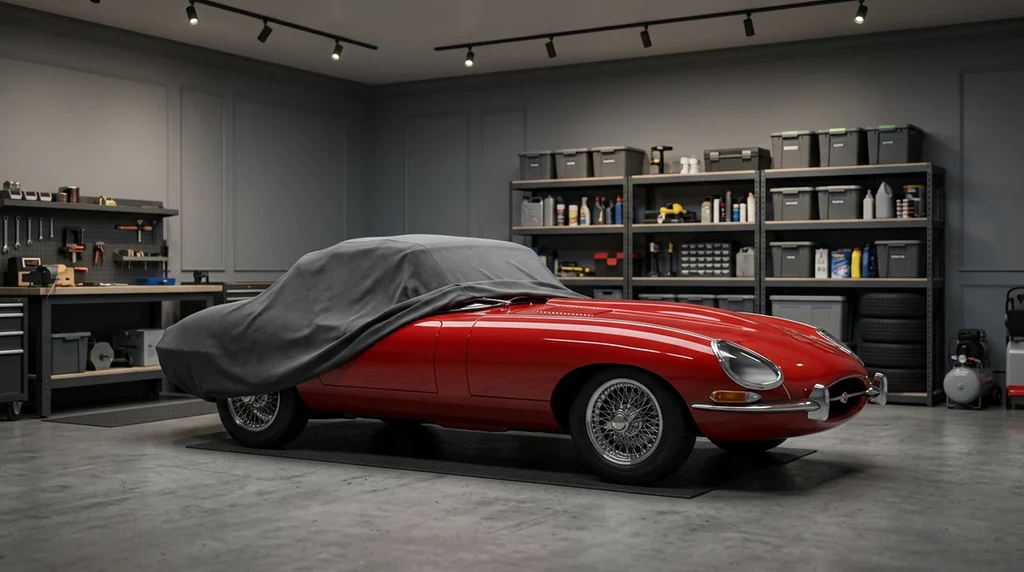
Enclosed indoor units keep weather off the vehicle. For a classic car, a restored muscle car, or any vehicle with original parts that would be difficult to replace, an enclosed unit is generally the right call. Devon Self Storage offers dedicated vehicle and RV storage options if you're comparing what's available near you.
Sizing the Space Correctly
A standard passenger car fits comfortably in a 10' x 20' unit, which also leaves room to walk around the vehicle and store a few related items alongside it. Longer vehicles, trucks with extended beds, or cars stored with a trailer need a larger footprint. Devon's unit size guide is a useful starting point for matching the right space to your vehicle's dimensions before you commit to a unit.
Plan for Retrieval, Not Just Storage
Drive-up access lets you pull the vehicle in and out without maneuvering around other units or navigating a tight interior corridor. If the car will sit for six months or more, plan a mid-storage check-in to verify tire pressure, take the car for a short drive, and confirm the battery is holding a charge.
Long-term indoor car storage done right is a relatively low-effort investment that pays off when you pull the car out and it's ready for the road. Whether the vehicle is a daily driver going into winter hibernation or a classic that only comes out for shows, the preparation steps and the right unit type make the difference between a car that's ready to drive and one that needs work before it can. Browse Devon Self Storage locations to find a facility near you with vehicle storage, then contact or call the facility to reserve your space.