
How To Prep Your RV for Storage
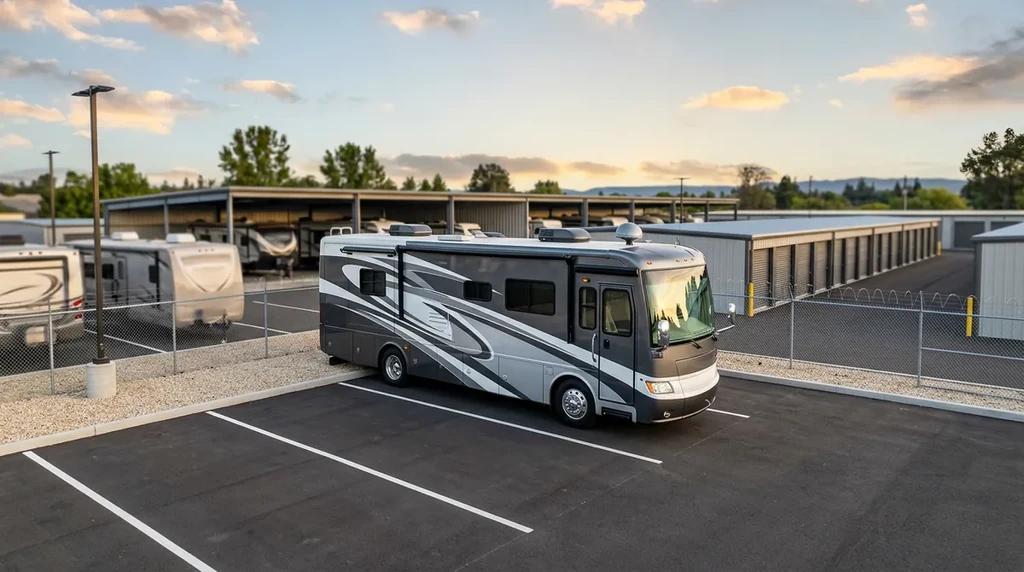
How To Prep Your RV for Storage
The last trip of the season is done, the awning is rolled up, and now comes the part most RV owners put off: getting the rig ready for RV storage. Skip this step, and you may open the door in spring to a cracked water line, a dead battery, or a cab that smells like a forgotten lunch bag. A little prep work now saves a real headache when camping season opens back up.
Drain and Flush Every Water System
Water left sitting in lines, tanks, or the water heater through a cold winter will expand, crack fittings, and ruin components that are not cheap to replace. Drain the fresh water tank and the water heater completely, turning the heater off and letting it cool before you open the drain plug. Then blow out the lines with compressed air or run RV-rated antifreeze through the system. If you use antifreeze, put the water heater in bypass mode first so you don't fill the tank with antifreeze. Empty the gray and black tanks at a dump station before you ever pull into your storage space, and leave the valves open so nothing collects.
Handle the Engine, Battery, and Fuel
Add a fuel stabilizer to the tank before your last drive to the storage facility. Untreated gasoline breaks down over a few months and can gum up the fuel system. Disconnect the battery or connect it to a trickle charger so it holds a charge through the offseason. If the RV has a generator, run the stabilizer through that system as well.
Clean the Interior and Exterior Before You Park
Pull out any food, toiletries, and paper goods from the cabinets. Even sealed packaging can attract rodents over a long storage period. Wipe down surfaces, clean the refrigerator with the door propped open, and remove any fabric items that could hold odors. On the outside, wash the roof and body, then apply a UV protectant to seals and rubber trim. A clean RV going into storage is a clean RV coming out.
Protect the Tires and Cover the Rig
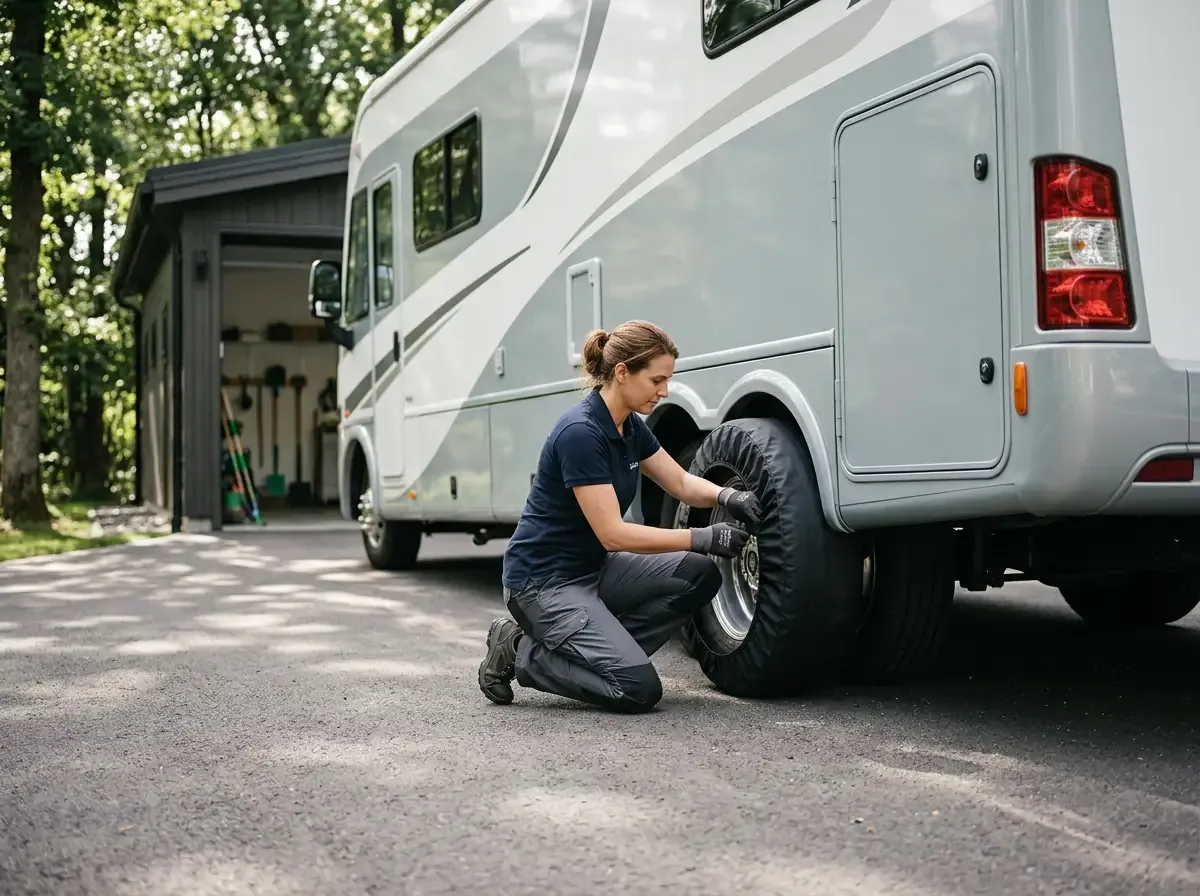
Tires sitting in one position for months can develop flat spots, particularly in colder climates. Inflate them to the manufacturer's recommended pressure and consider placing boards or tire pads underneath to reduce direct contact with concrete or asphalt. A quality RV cover adds a layer of protection from UV exposure and keeps debris off the roof. If your storage space is covered rather than fully open, the cover becomes less critical, but it still helps.
Choosing the Right Storage Space for Your RV
Not all storage facilities are set up to handle a full-size motorhome or a fifth-wheel with a tall profile. Before you commit to a space, confirm the dimensions work for your rig's length and height, and check that the entry lane gives you enough room to maneuver on the way in and out. RV and vehicle storage options vary by facility, so it pays to ask about pull-through access and surface type. Our unit size guide is a useful starting point for matching your rig's footprint to the right space.
For residents whose HOA restricts trailers and oversized vehicles from sitting in driveways, a dedicated storage space is often the only practical option. Keeping the RV off the street also creates room in your driveway for everyday use and reduces the chance of incidental damage. When the season opens back up, getting back on the road is simple: pick up your rig and go. You can also explore boat storage options if you're storing a trailer alongside a watercraft, since many facilities offer both in the same location.
Devon Self Storage has locations across multiple states, so finding a facility close to home is usually straightforward. Browse all storage locations to find the one nearest to you. A well-prepped RV in a well-chosen space will be ready to roll the moment the season calls for it.