How Contractors Can Cut Overhead With a Storage Unit
How Contractors Can Cut Overhead With a Storage Unit
Running a service-based business means managing a constant flow of tools, supplies, and equipment, and finding somewhere to put it all. For painters, plumbers, landscapers, and cleaning crews, that "somewhere" often ends up being a cramped personal garage, a corner of a rented warehouse, or the back of a van that's already doing double duty. None of those options are cheap, and none of them scale with your workload.
The good news? There's a smarter way to handle your gear. A Devon Self Storage unit gives you professional-grade security, drive-up convenience, and month-to-month flexibility, without locking you into a lease that costs more than it's worth. It's not just a place to keep your stuff. It's a strategic tool for running a leaner operation.
This guide by Devon Self Storage breaks down exactly how trade contractors and small service businesses can use self storage to reduce overhead, stay organized, and keep crews moving efficiently from one job site to the next.
The Hidden Cost of Storing Tools and Supplies the Wrong Way
Most contractors don't sit down and calculate what their current storage arrangement is actually costing them, but the numbers add up fast. If you're using your personal garage as a de facto supply depot, you're absorbing costs that never show up on an invoice: lost vehicle parking, reduced home storage, and the inefficiency of hunting through disorganized shelves before every job. That time has a dollar value, and it's not small.
Warehouse rentals present a different problem. Commercial warehouse bays are typically priced per rentable square foot at rates designed for full-time industrial users. A trade contractor who needs 400 square feet of usable space often ends up paying for 1,000 or more, because that's the smallest bay available. You're essentially subsidizing square footage that sits empty month after month, which is a poor return on a fixed overhead line item.
The smarter reframe is this: a business storage rental isn't just an expense, it's a reallocation of overhead toward something that actually fits how you work. When your storage solution is the right size, professionally secured, and positioned close to your job sites, it stops being a cost center and starts functioning as an operational asset. Devon Self Storage is here to help.
Why Self Storage Is a Smarter Fit for Service-Based Businesses
The most underrated advantage of self storage for small businesses is flexibility. Unlike a warehouse lease that locks you in for 12 to 36 months, most storage facilities operate on month-to-month terms. That means you can scale up to a larger unit during peak season, say, a 10x20 when landscaping demand spikes in spring, and downsize to a 10x10 when things slow down in winter. Your overhead moves with your revenue, not against it.
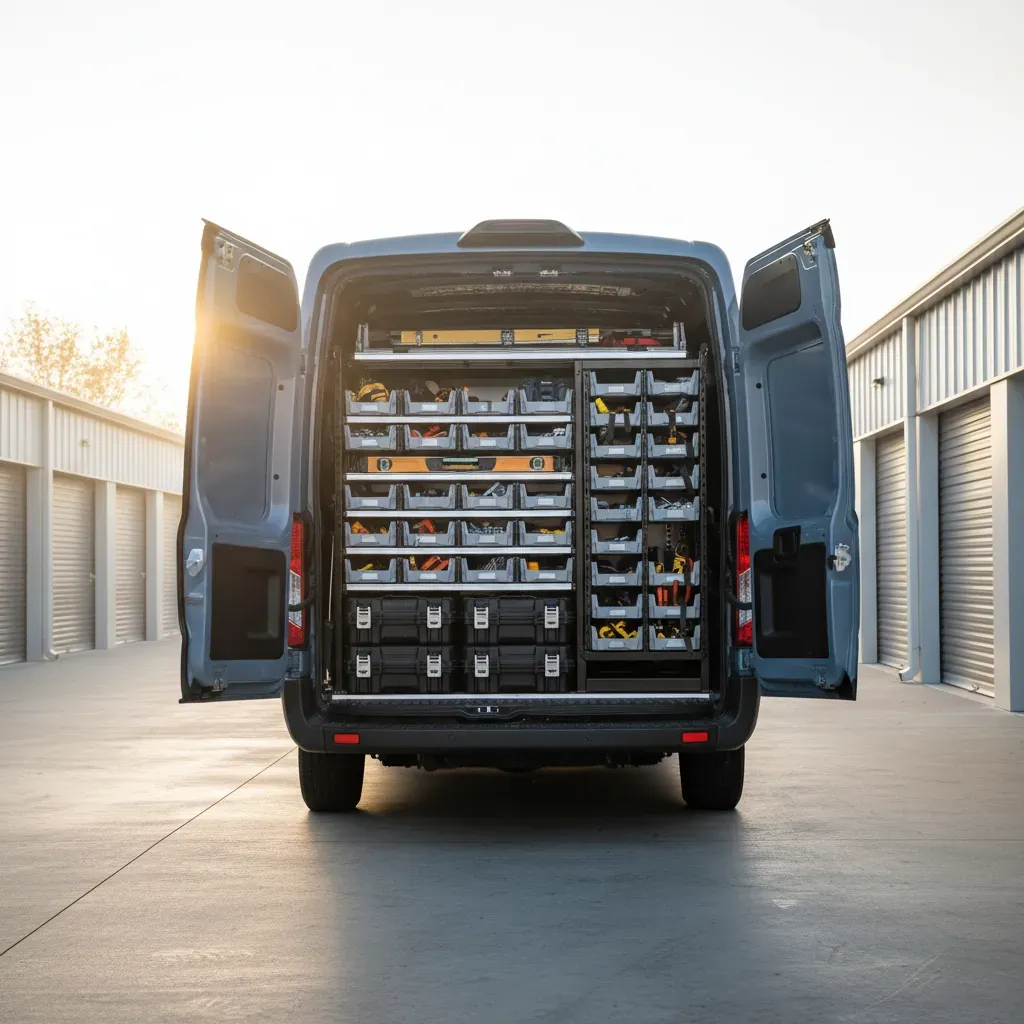
Proximity matters, too. A well-located facility with proximity to major thoroughfares and job sites cuts down on drive time significantly. For crews that load up before dawn and hit multiple locations in a day, shaving 15 minutes off the morning routine isn't trivial; it compounds across every workday of the year. Drive-up storage for contractors makes that possible, allowing teams to pull directly up to their unit, load what they need, and get moving without navigating a parking structure or waiting for a freight elevator.
When you compare commercial storage units at a Devon storage facility against traditional warehouse rentals, the value proposition becomes clear:
- Lower cost per square foot. You pay only for the space you actually use.
- No long-term lease commitment. Month-to-month terms protect your cash flow.
- Professional-grade security. Gated access and individual unit locks.
- Climate-controlled options. Units that maintain a consistent temperature range protect sensitive power tools, finishing materials, and electronic equipment from damage caused by extreme heat or cold.
For contractors making a seamless transition away from an oversized warehouse bay or a packed garage, this combination of features is hard to beat.
What To Store (and How To Organize It Like a Pro)
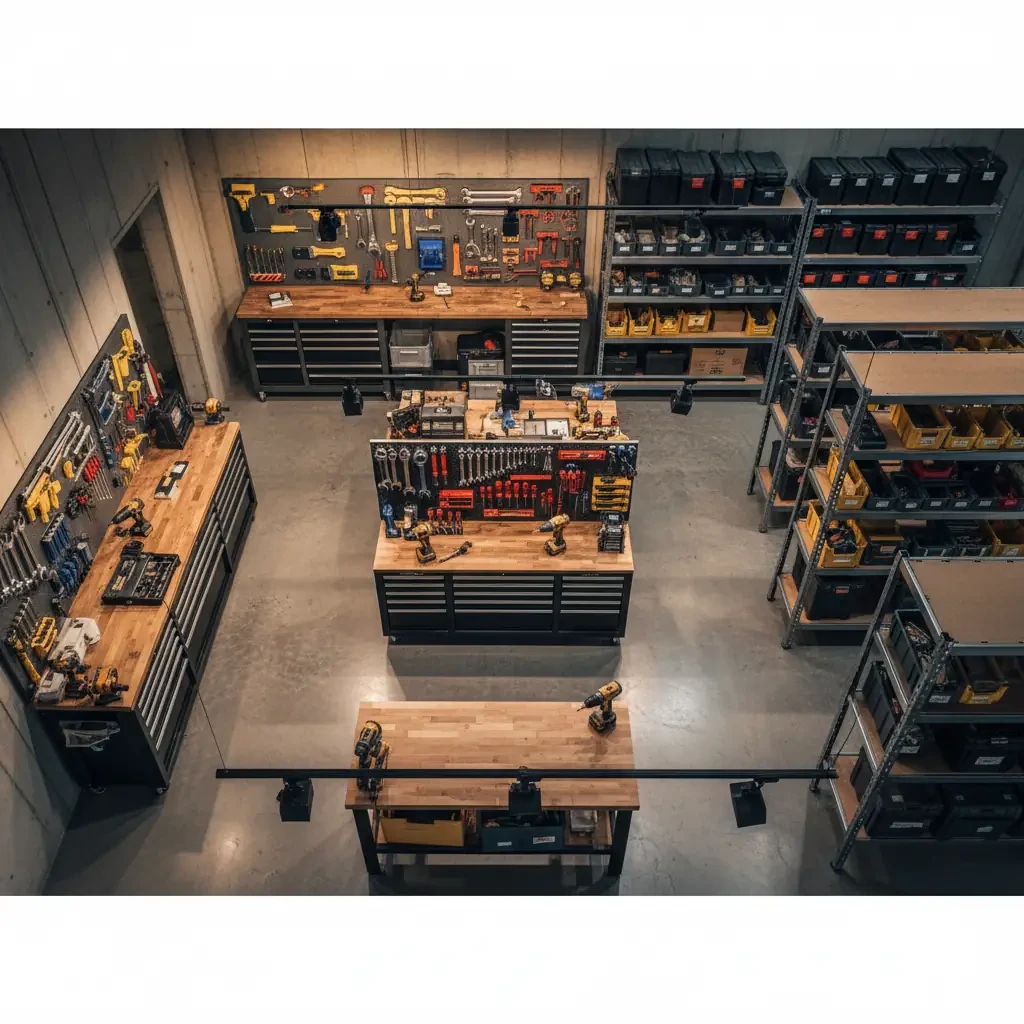
A contractor storage unit is only as useful as it is organized. Before you start stacking bins, think about what you're storing and how often you need it. The most common high-value items that service businesses keep in storage include:
- Hand tools and power equipment: Drills, saws, levels, compressors, and specialty tools by trade.
- Seasonal supplies: Winterization materials, holiday lighting, warm-weather landscaping gear.
- Uniform and PPE inventory: Backup uniforms, gloves, hard hats, and safety vests.
- Overflow materials: Extra PVC, paint, mulch bags, cleaning solution, and job-site consumables.
- Small equipment and attachments: Drill bits, blades, hose reels, and extension cords.
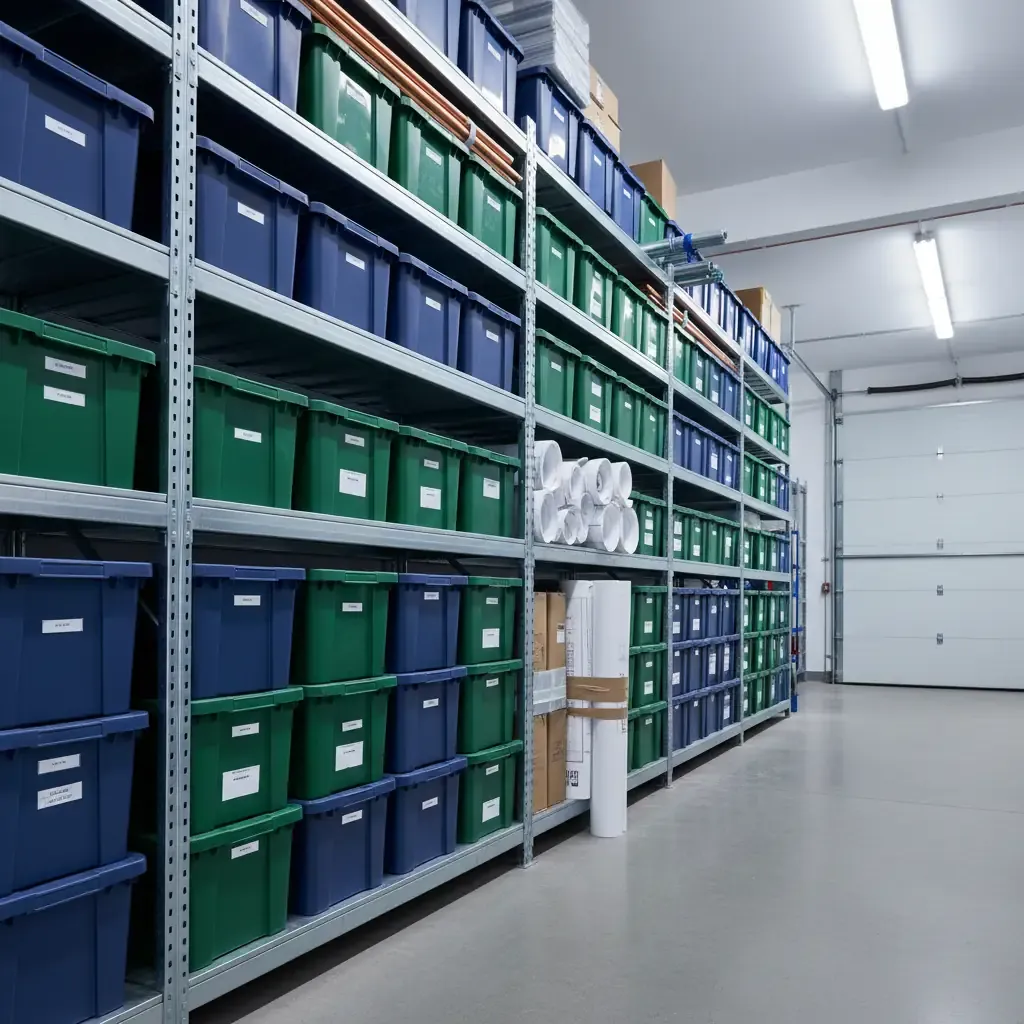
Once you know what you're working with, build a strategic labeling system. Color-coded bins organized by trade or project type let crews locate gear quickly without disrupting workflow. A painter's unit might use blue bins for prep materials and red bins for finish coats. A plumber might organize by pipe diameter or fixture type. The goal is zero ambiguity, any crew member should be able to find what they need in under two minutes.
Vertical shelving and pallet organization are your best tools for maximizing every rentable square foot inside the unit. Stack lighter bins up high, keep heavy equipment at floor level, and leave a center aisle clear for movement. Pair that with a running digital inventory, a simple spreadsheet or app tied to the unit, and restocking and auditing become part of a routine rather than a scramble.
Choosing the Right Unit Size for Your Operation
Picking the wrong unit size is one of the most common mistakes contractors make. Undersizing creates clutter and workflow friction; oversizing wastes budget every single month. Before you rent, take an inventory of everything you need to house, tools, equipment, materials, and seasonal overflow, and match that volume to the unit sizes available at your facility.
Here's a practical breakdown of common unit sizes and how they map to real contractor needs:
- 5x10 (50 sq ft): Ideal for solo operators or specialty tradespeople with a focused tool set: a few power tools, hand tools, and a shelf of consumables.
- 10x10 (100 sq ft): A solid fit for small crews: fits a riding mower or two, shelving units, and a season's worth of supplies.
- 10x20 (200 sq ft): Works well for growing service businesses with multiple crews or equipment sets; comparable to a standard one-car garage.
- 10x30 (300 sq ft): Best for contractors managing significant assets, large equipment, fleet supplies, and bulk materials across multiple job categories.
Contractors in competitive markets, from Houston storage locations near major corridors to Memphis facilities with drive-up access, are already making the switch to right-sized commercial storage units. The infrastructure is there; it's just a matter of choosing the unit that fits your workflow.
If you're unsure which size is right for your operation, consult our storage unit size guide.
Your Next Step Toward Lower Overhead and Smarter Storage
The math on small business storage solutions is straightforward once you lay it out. Add up what you're currently paying for garage overflow, a warehouse bay, or disorganized van storage, then factor in the hidden costs: commute time to retrieve equipment, damaged tools from temperature swings, and the crew hours lost to disorganization. Compare that total against a monthly rate for a well-located, drive-up storage unit at a Devon facility. For most contractors, the numbers tell a clear story.
If you're ready to make the switch, start with a visit to a local Devon facility to tour available units. Contractors across the country are finding that a flexible storage unit rental is one of the most effective ways to reduce fixed overhead without sacrificing operational capability. Whether you're based near our storage facility in Marietta, looking at business storage options in Joliet, or exploring commercial storage units in Greensboro, the right setup is closer than you think.
Rent a storage unit today and choose a solution that grows alongside your business.