
Basement Storage Ideas: How To Organize and Reclaim Your Space
Basement Storage Ideas: How To Organize and Reclaim Your Space
A basement that started as a laundry room slowly becomes a holding area for holiday decorations, sporting gear, furniture from a previous home, and boxes that never got unpacked after the last move. If that sounds familiar, a few targeted basement storage ideas can turn the chaos into a system that actually holds up over time. The key is deciding what belongs down there, what belongs somewhere else, and how to arrange what stays.
Start by Sorting Before You Organize
Buying shelving units or bins before sorting is one of the most common missteps in any basement overhaul. You end up organizing things you should have gotten rid of, and the space fills back up within a few months. Before anything else, pull everything out and sort it into four groups: keep in the basement, keep but store elsewhere, donate or sell, and discard. This step alone can quickly cut the volume in half.
For guidance on working through the broader decluttering process, Devon Self Storage's room-by-room decluttering guide walks through all the details that apply well beyond just the basement.
Use Vertical Space Consistently
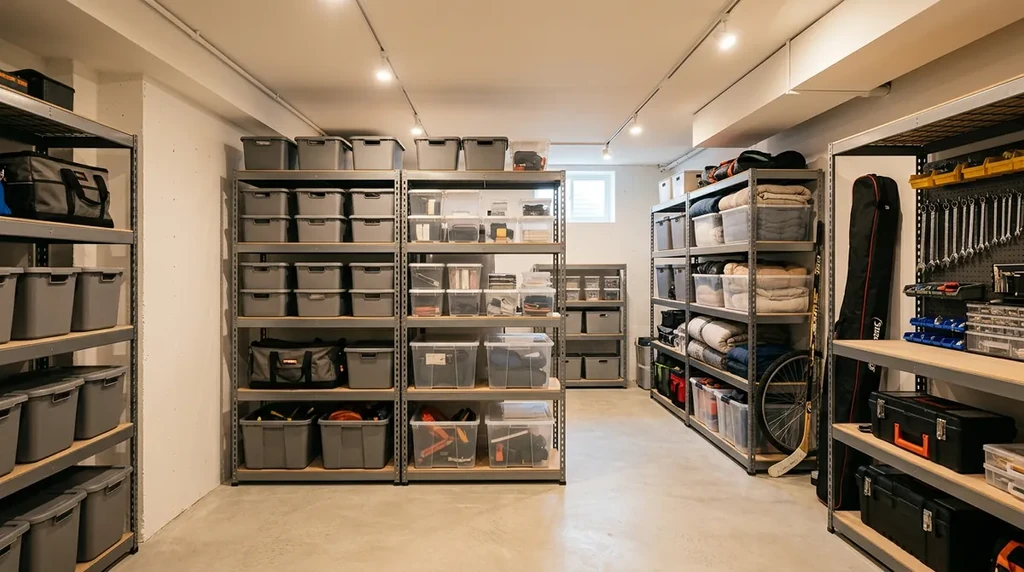
Most basements have ceiling heights that go largely unused. Freestanding wire shelving or wall-mounted systems that run floor to ceiling can dramatically increase usable storage without expanding the footprint. Group items by category on each shelf level, with heavier items lower and lighter, seasonal items higher. Label every bin clearly, because a system that requires you to open every container to find something will not get used.
Pegboards work well for tools, extension cords, and smaller items that tend to pile up on surfaces. Overhead ceiling racks are another option for bulky items like luggage or camping gear that are used infrequently.
Protect What Stays in the Basement
Basements can experience temperature swings across seasons, which affect certain items more than others. Wood furniture, musical instruments, and electronics stored long-term in an unstable environment can warp, crack, or degrade. If your basement runs cold in winter and warm in summer, consider moving temperature-sensitive items to a climate-controlled storage unit that maintains a consistent temperature range year-round.
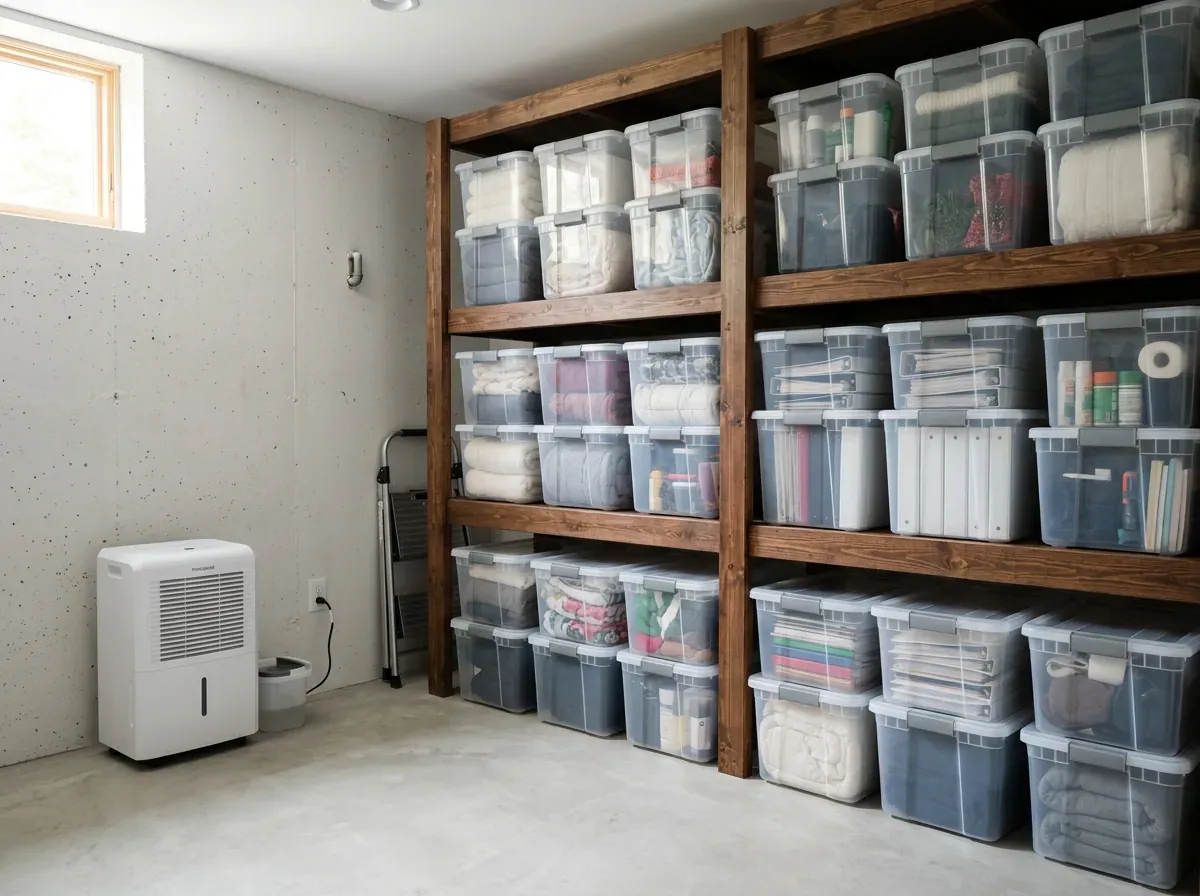
For items that do stay in the basement, use sealed plastic bins rather than cardboard boxes. Cardboard breaks down over time and offers little protection against damage when bumped.
Know When the Basement Is the Wrong Answer
Not everything that ends up in a basement should be there. Bulky seasonal items, boxes of old belongings, and furniture between uses can overwhelm a basement quickly, especially in homes where the space doubles as a utility area. A self storage unit from a Devon Self Storage facility is often a more practical choice for items you want to keep but do not need regularly.
Devon Self Storage offers personal storage options on flexible month-to-month leases, so you can rent for a season or keep a unit long-term depending on what your household needs. If you are unsure how much space you would actually need, our unit size guide can help you visualize your space before you rent.
A well-organized basement is achievable, but it requires making real decisions about what belongs there and what does not. Combine smart vertical storage at home with an off-site unit for overflow, and the basement becomes a functional part of the house rather than a room you avoid opening.