Commercial Storage ROI for Professional Service Providers

Most professional service businesses treat storage as a line item, a necessary cost tucked somewhere between rent and utilities. But the firms quietly gaining an edge are the ones treating off-site storage as a strategic lever. When you rethink where your assets live, you can meaningfully reshape how much your operations cost and how smoothly they run.
Whether you're a healthcare group managing medical equipment, a contractor staging tools between jobs, or a consulting firm drowning in archival documents, the question isn't whether you need storage. It's whether your current setup is working for you or against you. The commercial self storage benefits available through modern facilities go well beyond a locked unit.
Why Professional Service Providers Are Rethinking Storage as a Strategic Investment
Prime office space in most markets runs between $30 and $80 per rentable square foot annually. Storing rarely accessed equipment, branded materials, or seasonal inventory in that footprint is one of the most expensive decisions a business can make without realizing it. A nearby Devon Self Storage facility can house those same assets for a fraction of the cost, freeing your office for the revenue-generating work it was designed to support.
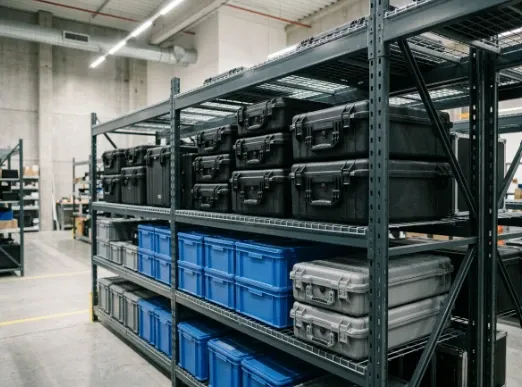
Micro-warehousing solutions offer something traditional commercial leases can't: flexibility. Month-to-month terms mean service-based businesses can scale their storage footprint up or down without long-term commitments. A marketing agency ramping up for a product launch can add a unit temporarily. A contractor finishing a large project can downsize afterward. That kind of elasticity doesn't exist in a five-year office lease.
Location is another hidden feature that often goes overlooked. A well-positioned storage facility near a major corridor, like our Joliet location off Essington Road, can directly support last-mile delivery logistics, which, according to eMarketer, already accounts for over half of total shipping costs for most businesses. When your supplies or client-ready materials are staged near a key thoroughfare, you shorten fulfillment windows and reduce reliance on third-party couriers. That's a real, calculable cost reduction.
Calculating the Real Returns: Time, Space, and Operational Efficiency
Storage ROI for businesses doesn't come from one source. It compounds across several operational areas. Here's a practical breakdown of where the returns actually show up:
- Reduced office square footage: Relocating archival files, surplus inventory, or equipment to off-site storage directly lowers your rentable square foot requirement and your monthly lease payment.
- Lower on-site insurance exposure: High-value assets stored off-site reduce the concentration of insured items in your primary location, which can positively affect commercial property premiums.
- Faster client-ready turnaround: Organized, labeled off-site storage means staff retrieves what they need quickly, meaning fewer wasted hours and more billable time.
- Extended asset lifespan: Temperature-regulated environments protect medical equipment, tech hardware, and sensitive documents from the wear that comes with poor storage conditions, reducing costly replacements.

That last point is particularly relevant for professional service providers' storage needs in healthcare and tech. A consistent temperature range keeps sensitive hardware and instruments performing at spec. Replacing a single piece of diagnostic equipment or enterprise hardware can easily cost more than years of storage fees at a quality facility.
The operational continuity angle is equally compelling. When supplies and materials are organized and labeled in a dedicated off-site space, rather than scattered across a back office, your team stops wasting time searching and starts delivering. For firms billing by the hour, that's not a soft benefit. It's revenue. Facilities like our Duluth location near Peachtree Industrial are designed with exactly this kind of professional workflow in mind.
Your Next Step Toward a Smarter Storage Strategy
Start with a simple audit. Walk through your office and identify everything that hasn't been touched in the last 60 days: archived client files, seasonal promotional materials, backup equipment, and trade show displays. These are strong candidates for a commercial self storage unit.
Next, run the numbers. Take your current office lease rate per square foot and multiply it by the square footage occupied by rarely used assets. Compare that figure against the monthly cost of a nearby storage unit. For most businesses, the savings surface immediately, and that gap only widens as office rents climb.
Finally, think ahead. As your assets under management and team size grow, your small business storage ideas need to scale with you. A micro-warehousing solution that flexes month to month ensures your infrastructure expands in step with your business, not in opposition to it. Explore professional storage options in Sterling, VA, or find a Devon Self Storage location near your office to start building a smarter, leaner operational footprint today.